AnxietyAidTools

Evidence-based mental health tools
Self-Paced / Optional

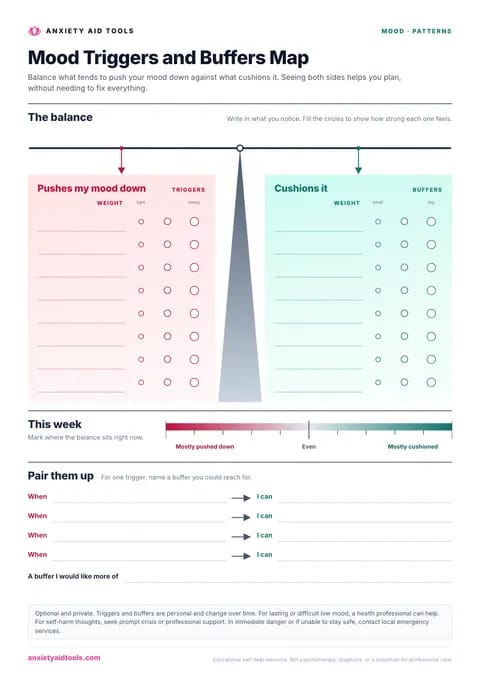
Mood Triggers and Buffers Map

Balance what tends to push your mood down against what cushions it. Seeing both sides helps you plan, without needing to fix everything.

Mood & Depression
Beginner
Self-Paced / Optional
Mood Triggers and Buffers Map
Pro download PDF & PNG

Overview

Print for offline use during therapy or self-practice

Printable PDF and PNG formats are also available in your dashboard

When to Use

  • When you want to notice what affects your mood.
  • When you want to plan sources of support.
  • When you want to compare one difficult influence with a possible source of support.

How to Use

  1. 1
    List influences that lower your mood and supports that cushion it. Fill the circles to show how strong each one feels.
  2. 2
    Mark where the balance sits right now.
  3. 3
    For one trigger, name a buffer you could reach for.
  4. 4
    Name a small, realistic buffer you would like more of.

A difficult mood can have many influences, while practical and personal support can make some moments more manageable. This balance map makes room to notice both without asking you to solve everything.

Mark the felt weight of each influence and where the balance sits this week. Pair one trigger with a possible buffer and name a support you would like more of; neither side has to cancel the other.

Optional and private. A pattern is not a diagnosis. For lasting or worrying mood changes, seek professional support. For thoughts of self-harm, seek prompt crisis or professional help. In immediate danger or if unable to stay safe, contact local emergency services. You can pause or stop tracking if it feels distressing or burdensome.