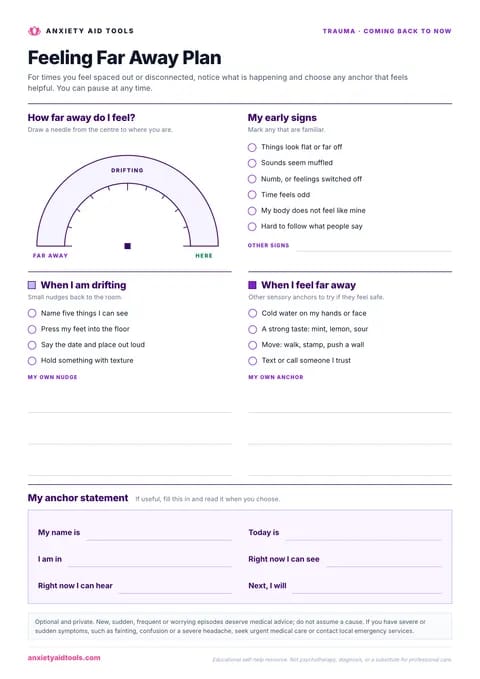
The dial offers a way to mark how far away or present you feel; it is a personal check-in, not a diagnosis. A checklist helps identify early signs such as muffled sounds or difficulty following conversation.
Two sections offer optional anchors, from noticing what you see or pressing your feet down to a texture, movement or contacting someone trusted. Different sensations can be uncomfortable for different people; choose, adapt or stop any exercise.
The anchor statement has spaces for your name, date, location, what you see and hear, and your next step. New, sudden, frequent or worrying episodes deserve medical advice; severe or sudden symptoms such as fainting, confusion or a severe headache need urgent care.